no b.s. glossary
It’s taken me a while to sort through what marketing language was real and what was part of the smoke and mirrors show. I have gathered definitions for marketing, design, and branding that will help us communicate, and give you a leg up understanding your own processes.

Dynamic Logo
If you’ve ever tried to write on a photo and found out that black or white text are both hard to read on top of the image, you already understand the importance of a dynamic logo. Context matters.
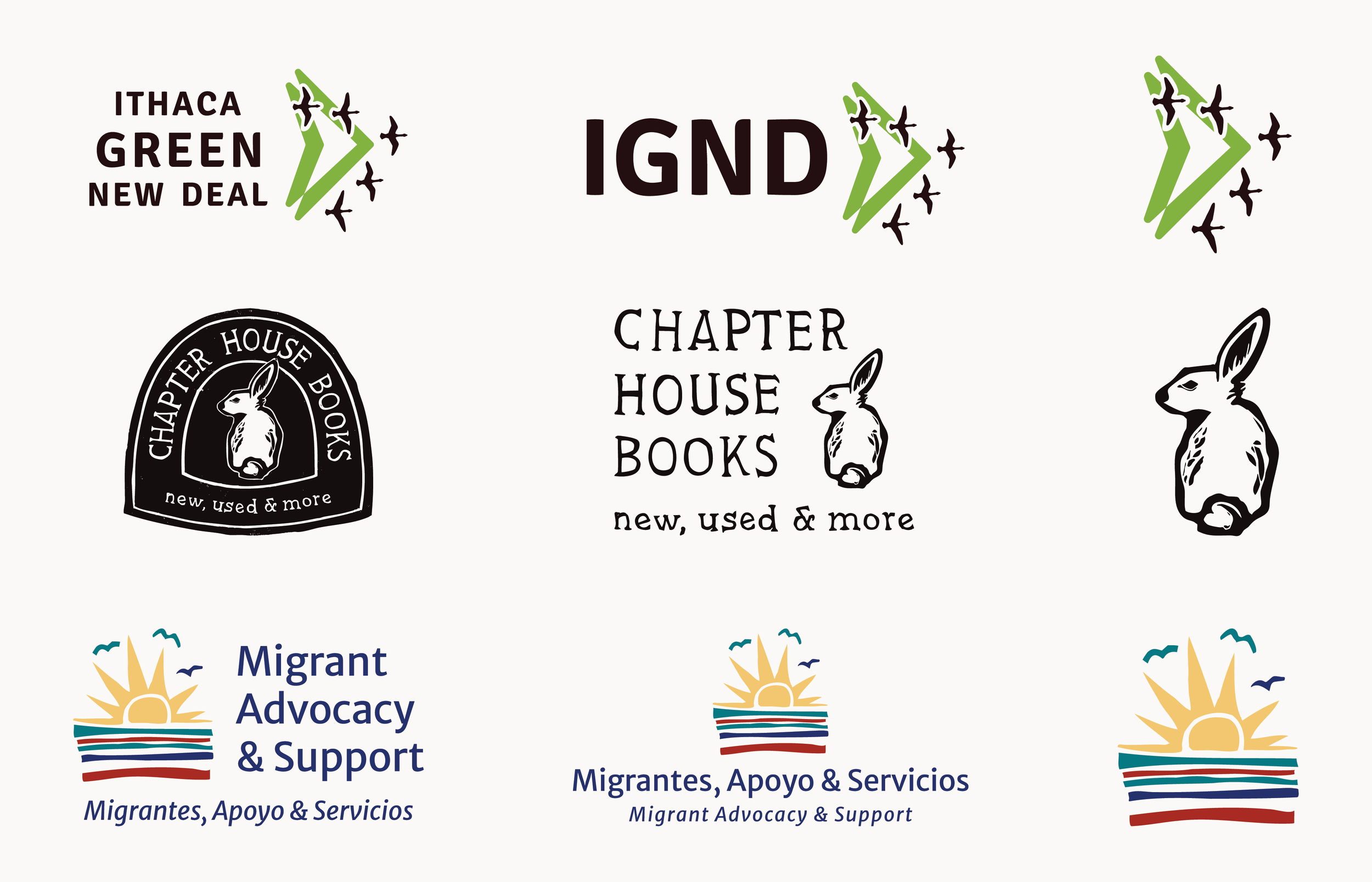
A dynamic logo is a set of different logo options for different contexts that retain key elements like color, form, and fonts.
One of the most recognizable examples of a dynamic logo are favicons. These eensie symbols often depict just enough information to let you know which tab is which. More common examples include banner logos, vertical logos, logo symbols, word marks, single color versions, languages, or outlined versions (that’s how you get around writing on a strongly contrasting image, btw).

Brand
A brand is the relationship between a business and their audience through time. It is the whole enchilada and includes hundreds of bits of information that are used to form an opinion about the quality of that relationship.
As business owners, we have total control over some aspects of our brand, like visual identity, location, and product quality, while other aspects are completely outside our control—we can’t control other people’s behavior or what they think about us. (Obviously many large corporations invest heavily in figuring out how to control what people think and do. I believe this is highly unethical and wrecks opportunities for nourishing connections between people and the cool stuff we make and do.) And, with all relationships, there’s a murky middle. This murky middle includes places where you interact with your clients, where customer service, market research, and integrity come into play.

Value
In design, value refers to the relative lightness or darkness of an object.
The text on this field is lower value than the background, which makes it easier to read. Value is not the same as bright or dull color. Green and red often have a similar value despite the intensity of red.
Hierarchy
Hierarchy is an intentional order given to visual elements and established through emphasis and movement. It’s what your eye sees first, second, third, and eventually back to first. Done well, hierarchy keeps a viewer engaged in your composition. The image is of Stag at Sharkey's by George Bellows and shows hierarchy through line work and value.